
Mat Pilates vs Reformer Pilates: Which Should You Start With?
If you're new to Pilates and researching where to begin, you've probably noticed there are two main types of classes and studios: Mat Pilates and Reformer Pilates. What's the difference? Which one is better for beginners? And does it matter which one you try first?
The short answer: Neither is "better" than the other; they work together and both are excellent ways to improve your strength and mobility. But understanding what each one offers will help you choose the right starting point for your body, your goals, and your budget.
Let's break down the difference between Mat and Reformer Pilates, what makes each one unique, and which might be the best fit for you as a beginner.
What Is Mat Pilates?
Mat Pilates is the original form of Pilates, developed by Joseph Pilates in the early 1900s. It's practiced on a mat (similar to a yoga mat) using just your body weight for resistance. The exercises focus on controlled movements, core strength, flexibility, and posture, and were created to be done anywhere.
What to expect in a Mat Pilates class:
No equipment required (though some classes may use small props like resistance bands, Pilates rings, or light weights)
Classes are often larger
You'll move through a series of exercises lying on your back, stomach, side, and sometimes standing
The resistance comes primarily from gravity and your own body weight
What Is Reformer Pilates?
Reformer Pilates is practiced on a piece of equipment called a Reformer, which looks like a bed frame with a sliding carriage, springs, straps, and a footbar. The springs provide adjustable resistance, and the sliding carriage allows for controlled movement. The Reformer (and other Pilates equipment) was developed to support a person’s mat practice.
What to expect in a Reformer Pilates class:
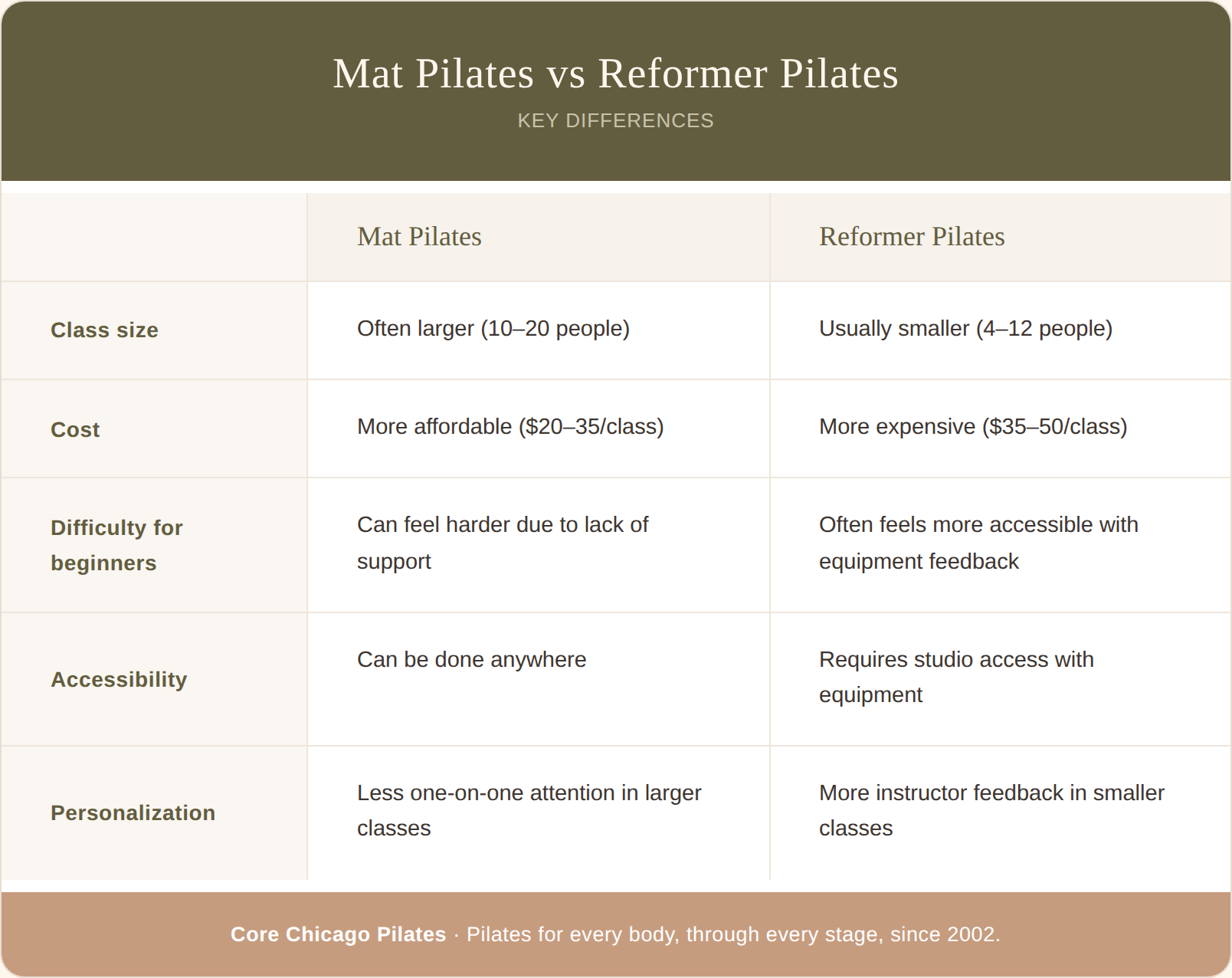
Smaller class sizes (usually 4-12 people) because of equipment limitations
The Reformer provides support and resistance through springs, which you can adjust based on your strength level
You'll do exercises lying down, sitting, standing, or kneeling on the carriage
The equipment guides your body through proper alignment and range of motion
Which One Is Better for Beginners, Mat or Reformer?
Reformer Pilates is often easier for beginners to start with. The equipment provides support and feedback, which helps you understand what you're supposed to be feeling. The springs can assist or challenge you depending on the exercise, making it more adaptable to different fitness levels.
With that being said, Mat Pilates is the foundation of everything in Pilates. Historically, Joseph Pilates designed the Mat work to be practiced at home, and he developed the equipment (like the Reformer) to help people get stronger on the Mat. So the Reformer was meant to support your Mat practice, not replace it.
Common Myths About Mat vs Reformer Pilates
Myth 1: "Reformers are better than Mat." This one usually comes from the fact that Mat classes are less expensive. But keep in mind you’re likely getting less personalized attention since Mat classes are larger. Reformer isn't "better,” it's just different. The Reformer supports your Mat practice and can make certain movements more accessible.
Myth 2: "Mat Pilates is just stretching." Mat Pilates is a full-body strength workout. If it feels too easy or like just stretching, the instructor might not be teaching a true Pilates class, or the movements aren’t targeting your muscles as intended.
Myth 3: "You need to start with Mat before trying Reformer." Not necessary. While Mat is the foundation, many people start with Reformer because it's easier to understand what muscles you should be using, and you have the support of equipment and straps.
Myth 4: "All ‘Mat Pilates’ classes are Pilates" Many studios today blend Mat Pilates with barre, yoga, or aerobics, adding lots of pulsing, light weights, and high-rep movements. More “traditional” Mat Pilates follows a specific sequence of exercises designed to work your entire body through all ranges of spinal motion. There’s nothing wrong with these hybrid classes, but knowing what you’re getting is important.
How to Decide: Mat or Reformer?
Try Mat Pilates if:
You're on a budget and want a more affordable option
You want the flexibility to practice at home
You're comfortable with minimal hands-on instruction in a larger class
You have some body awareness and fitness experience
You want to build serious core strength like challenging body weight motions
Try Reformer Pilates if:
You're brand new to Pilates and want more guidance
You want more personalized attention from an instructor
You like the idea of equipment providing feedback on your form
You have injuries or mobility limitations and need more support
You want to feel the work in your muscles more immediately
Can You Do Both?
Yes! Many people find that doing both Mat and Reformer makes them better at each. The Reformer helps you build strength and understand movement patterns that make Mat work easier. And Mat work builds the body control and awareness that makes your Reformer practice more effective.
If you're trying Pilates for the first time, we generally recommend starting with Reformer to build your foundation, then adding in Mat classes once you have a better understanding of the basic principles.
What to Look for in a Beginner Pilates Class
Whether you choose Mat or Reformer, here's what to look for:
Small class sizes
Even for Mat classes, smaller is better when you're learning. Look for studios that cap Mat classes at 12-15 people max.
Certified instructors
Make sure your instructor is comprehensively certified in Pilates (not just a weekend certification). Look into their training program.
Beginner-friendly
Some studios offer specific "Intro to Pilates" or "Foundations" classes. These are great starting points.
Core has a whole page with Intro Packages, and we have a blog on the best beginner classes.
Clear cuing
A good instructor should explain not just what to do, but why you're doing it and what you should be feeling.
The Bottom Line
Mat and Reformer Pilates aren't competing methods; they work together. Mat is the foundation, and Reformer helps you get stronger in your Mat practice. For most beginners, the Reformer is more accessible and easier to understand. But both should challenge you, build strength, and improve your flexibility and posture.
The best choice in our opinion: Try both and see what feels right for your body. And if you like Pilates, you'll probably end up doing both regularly.